
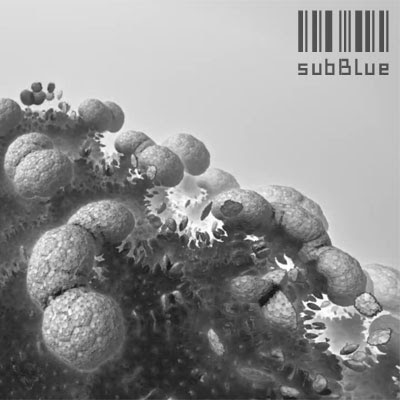
 SubBlue describes himself as a "laser physicist turned web developer with an interest in generative graphics programming" and his works are fascinating.
Showing posts with label science. Show all posts
Showing posts with label science. Show all posts
Tuesday, 1 March 2011
SubBlue
SubBlue describes himself as a "laser physicist turned web developer with an interest in generative graphics programming" and his works are fascinating.
Saturday, 19 February 2011
DANIEL PALACIOS

I find Daniel Palacios' work extremely beautiful, engaging, and thought-provoking. His work Waves has received a lot of attention in the blogosphere. Though not without reason, I prefer Intrusiones which illustrates sounds and its influence over time. That said, his entire catalogue is worthy of attention.
"The work of Daniel Palacios (Cordoba, 1981), an artist educated in sciences who graduated with a degree in Fine Arts, develops by applying the relations of art, science and technology to space and the perceptual systems as a result of his postgraduate studies which earned him Masters degrees in Art and Technology and Art in the Public Sphere.
Works such as ‘Waves’, ‘Outcomes’ and ‘Kill the Process’ have brought him to exhibitions like ‘Synthetic Times’ at the National Art Museum de China [NAMOC] and ‘El Discreto Encanto de la Tecnología (The Discreet Charm of Technology)’ at the Museo Extremeño e Iberoamerica of Contemporary Art [MEIAC] in Badajoz, the prestigious Neue Gallerie of Graz (Austria) and Zentrum für Kunst und Medientechnologie [ZKM] in Karlsruhe (Germany), one of the main sanctuaries for electronic art on a global level, in addition to taking part in such international fairs as ARCO and festivals of the stature of ARS Electronica of Linz (Austria). His work has received major recognition, including the second VIDA9.0 Art and Artificial Life awards and support for production of his work from the PROPUESTAS programme of the Arte y Derecho Foundation, in addition to being awarded an artist residency at Casa Lutetia (Sao Paulo, Brazil), published in the MIT Press specialist magazine ‘Leonardo’ in “Art from Andalusia for the 21st Century’ coordinated by Ivan de la Torre Amerighi, and the recent Tames & Hudson publication of ‘Art and Science Now: How Scientific Research and Technological Innovation are Becoming Key to 21st-Century Aesthetics’ by professor Stephen Wilson.
He has also given workshops and conferences on the combined use of technology and plastic arts in such schools and centres as the FAAP School of Plastics Arts (Brazil), School of Fine Arts of La Laguna (Tenerife), CRCC (Palma de Mallorca), Institute of Advanced Architecture of Catalonia, IAAC (Barcelona), File Symposium at the SESI Gallery (Brazil), Science Week at the Centre of Contemporary Art in Malaga…Concerning information and electronic technology as tools for creating a process more than achieving a defined representation. Although it encompasses different themes, his work is a set of relationships with the surrounding environment: whether with the physical space itself as we perceive it or what phenomena are happening in it. In a certain sense, he creates situations which invite reflection or represent his own reflections at a specific moment of his research concerning perceptions and the manner in which they influence the way we relate to them.
Contact with reality and plastic languages is a major aspect of his work, which seeks to create situations and not simulations, utilizing ‘reality’ in his installations with the goal of creating plastic, non-digital results. Technology allows him to control what factors come into play in that space, in what measure and what their effect will be. In this way, the public is an indispensable part of the work by participating in its process, while the artist in turn can study their reactions, the one factor he cannot control and the vital aspect of his work."


Links:
Daniel Palacios
Daniel Palacios (Vimeo)
Daniel Palacios
Monday, 19 July 2010
LANDSAT-7 SATELLITE: Ocean Sand, Bahamas
 This detail from a satellite image of the sands and seaweed of the bahamas being sculpted by currents much like the wind sculpts sand in the desert, is intriguing. See more satellite images like this on Earth As Art.
Links:
Earth as Art: Ocean Sand, Bahamas
High Resolution Image

Earth As Art (homepage)
Tuesday, 7 October 2008
DAVID GALLO: Underwater Astonishments
 Oceanic explorer and ambassador David Gallo presents some beautiful imagery and fascinating insight into the deep sea in the following pair of talks from the TED series.
And here's a fascinating glimpse of an 18 foot six-gilled shark filmed at 1000m. Also have a look at these snail fish(Limparidae) filmed at an amazing 7700m.
Thursday, 25 September 2008
GLEN MARSHALL's Digital Poetry
 Glen Marshall has some interesting short films in his portfolio making use of autonomous programs of his own creation that are navigated by his specifications and sound. His first independent film for the Irish Film Board, Butterfly garnered a lot of attention following its creation in 2002.
Glen went onto create a video for Peter Gabriel in 2003 for his track "The Drop" and recently completed Music is Math which he describes as follows:
This is the HD and finished version of my video ‘Music Is Math’. I just let the program run till the end of the music, I felt reluctant to interfere too much by trying to sculpt an ending, and just let the code run its own natural course.

Links:
Butterfly: Glen Marshall Computer Art
Glen Marshall Vimeo
Glen Marshall MySpace
Music is Math. Cartoon Brew (Source)
Monday, 1 September 2008
Multiple KLEIN BOTTLES inside/outside eachother
 For those of you unfamiliar with a Klein Bottle, it has the special property in that it's surface (both interior and exterior) are the same. In our universe of three dimensions, we can only come up with an approximation of a true Klein bottle.
Taking it a step further, Alan Bennett of Bedford, UK created three Klein bottles set inside eachother as shown above.
Here is an animation of how a Klein bottle is formed:
Links:
Glass Triple Klein Bottle (Science Museum)
Klein Bottle Wiki
Imaging Maths - Inside the Klein Bottle
Sunday, 27 July 2008
EYE OF SCIENCE

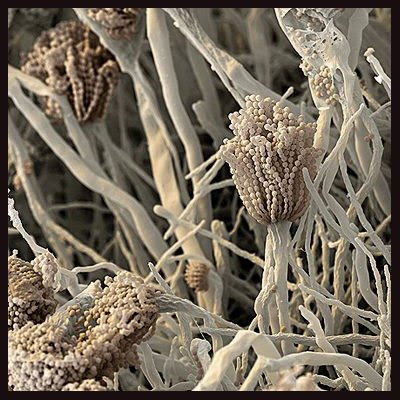
The work of Oliver Meckes and Nicole Ottawa is stunning. Their philosophy for Eye of Science is stated as follows:
"As a two-person team of photographer and biologist, our aim is to combine scientific exactness with aesthetic appearances, and thereby help to bridge the gap between the world of science and the world of art. We are committed to the rigorous standards of scientific investigation, but also to the use of color as a creative and harmonious tool to achieve beauty. By combining science and aesthetics we hope to enthuse our audience. Day after day we explore fascinating forms and structures in a world beyond human vision."


Links:
Eye of Science
Wellcome Image Awards (SiouxWIRE)
Thursday, 10 April 2008
Introducing VILAYANUR S. RAMACHANDRAN
 Vilayanur Ramachandran is a neurologist best known for his work on neurological disorders through simple, low-tech investigations that reveal the inner workings of the brain. The work of a neuroscientist may seem incongruous to SiouxWIRE, but understanding how our minds function and perceive the world is well within mandate.
In addition to pursuing a career in neuroscience, Vilayanur also studied visual perception through psychophysics and is credited with the discovery of visual effects and illusions such as perceived slowing of motion at equiluminance (where red and green are seen as equally bright), stereoscopic capture using illusory contours, stereoscopic learning, shape-from-shading, and motion capture. See HERE for Ramachandran's illusions.
The video below is Vilayanur's talk on how brain damage can reveal the links between internal structures of our minds:
Monday, 7 April 2008
Through the chambers of the heart: VISIBLE BODY
 Visible Body is a human anatomy software tool with detailed models of the various systems of the human body. Those of you working on figurative modelling should find the muscle diagrams quite useful. It's a fascinating and compelling way to learn and it's free.
Visit Visible Body for more information.
Links:
Visible Body
Friday, 28 March 2008
Sound from Soot: The Oldest Recording
 A recording from 1860 that was never intended to be played has been heard thanks to the work of sound historians Patrick Feaster and David Giovannoni of First Sounds.
The machine for which it was produced in 1860 was created by Édouard-Léon Scott de Martinville and called a phonoautograph. It's original intention was to produce a visual representation of sound on soot-coated paper rather than as a means to playback audio.
Roughly ten seconds in length, the recording is of a person singing “Au clair de la lune, Pierrot répondit” – a snippet from a French folksong. Listen to it HERE.
Links:
First Sounds
Oldest recorded voice sings again (BBC)
Tuesday, 25 March 2008
Wellcome Image Awards 2008
 A fly on sugar crystals -Dave McCarthy & Annie Cavanagh
Visit the homepage HERE.
 crystals of oxidised vitamin C - Spike Walker
 Ruptured Blood Vessel - Anne Weston
Links:
Wellcome Image Awards
** Images displayed with the kind permission of Wellcome Images
Subscribe to:
Posts (Atom)
