Thursday, 5 July 2007

Drink the Links


It's been something of an uproar this week working on the overhaul as well as life, but I have finally made it around to updating the links which are now conveniently served in bite sized, categorized chunks further down the right panel.

I've forsaken linking to individual artists as those I admire have either been or will feature in either an interview or post and have concentrated on sites covering a broader range of work.

Please browse and visit them. They are all top quality and in line with the ethos of this blog range from all disciplines and class. Enjoy.

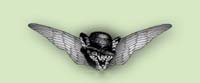
I just realized that the picture I whipped together for this post appears rather cult-ish with its "follow the wire" slogan. Somehow the concept I had of the internet being the 'wire' in a sort of double meaning doesn't seem as clear in the end result as it did in my befuddled brain.

Interview: KAKO UEDA


As with artist Nikki McClure, Kako Ueda creates more often with an X-acto knife as opposed to a pen or brush. Her works are elaborate forms with a strong sense of her Japanese roots and nature.

Working at
ARAS and with a strong interest in her medium's history and its association with culture, she has a fascinating body of work. She has recently been the recipient of the 2007 New York Foundation for the Arts (NYFA) Fellowship.

Would you share your history with paper from your childhood discoveries to your current work?
I learned to make an origami crane and other animals from my friends as well as from my parents. I started drawing and painting early on (3-4 years old) and I distinctively remember that the first time I used canvas to paint oil (I was 11 or 12), I didn't like it. So I went back to painting on paper with watercolor and acrylic. I also remember that I made paper dresses for my dolls (including Barbie!!) when I was a little girl.

I studied photography in college. I initially wanted to get into the painting department but it was very competitive; you had to fight for a studio space so I was kind of fed up, thinking "I could paint on my own and I want to learn something totally new" so I chose photography as my main study. The teachers in the photo department were wonderful and I learned to really look at things in a frame. I also discovered the beauty of black and white photography. I continued to paint & draw (oil sticks) on paper on my own. I was accepted to Pratt Institute graduate program in 1996 based on the organic inspired abstract drawings I did on paper. I started folding paper while at Pratt and my thesis show was a group of wall-reliefs made of dye-cut envelops (which I cut myself). There were black and white ones and very minimal looking but suggestive of the body somehow.


Is there a particular approach you have to colour? Is there a fixed palette that you prefer? And how would you differentiate between your monochromatic silhouettes and full colour works?
Sticking to black, white and grey is very comfortable for me, that is why I sometimes have to use colors to put myself in an uncomfortable place. To me colors could be overly emotional and could give mixed messages. Black and white can be expressive and "colorful" too but always with a certain sense of restraint. When I use colors I tend to go all the way and create "very colorful" work as if I let go of something.

Wednesday, 4 July 2007

Twisting the WIRE


The redesign is virtually complete. There are a few minor additions remaining, but it's essentially there. Things are a little brighter, buttons are more immediately accessible, social bookmarking has been integrated into the posts, Google translation has been added(thanks to Todd Cullen), recent comments are displayed, and we now have 3 columns(thanks to BlogCrowds) to accommodate the extended links and other new features.

I'm interested in getting your feedback. Is it an improvement? Is there anything else you'd like added? Any recommendations? What are your thoughts?

JÖRG COLBERG's "Conscientious"


Of the numerous sites I visit, Jörg Colberg's blog Conscientious is the most consistently interesting. Focusing on photography, Jörg also provides smart takes on other arts, politics, and life in general. His demeanor is never heavy handed and often times funny while remaining insightful.

Today, Conscientious is five years old and it's still as fresh as when it began. If you've never visited, I can't recommend it enough.

Links:
Conscientious
J.M. Colberg photography
Yeah But No

Tuesday, 3 July 2007

Erik Nietzsche(LARS VON TRIER), The Early Years


The work of Lars Von Trier is always of interest but in his latest script Erik Nietzsche, The Early Years, it promises a fresh insight into filmmaking and art schools in general. The script itself is purported to be autobiographical and is billed as a comedy-drama. As the project developed, Lars Von Trier's name has faded from view to be replaced in the credits by none other than the fictitious Erik Nietzsche.

Here is the description from the Danish Film Institute:
Erik Nietzsche is an intelligent but in many ways inexperienced shy young man who is convinced that he wants to be a film director. In the late 1970s Erik is accepted by the Danish National Film School where he enters a world of angry unhelpful tutors, weird fellow students and unwritten rules. It is both an exhilarating and angst-provoking period and Erik feels increasingly like a foreigner in the film industry. Frequently, he is merely an observer of the absurdities that surround him. He encounters trade union disputes, falls in love and experiences self-assured empowered women who refuse to make a commitment. It is a drama full of comedy — a sharp portrait of a conceited but entertaining world of film which we suspect our dogged young director will eventually concur with his vision.

Links:
Danish Film Institute film profile
Twitch post (source)
Lars Von Trier interview collection
Related Posts Plugin for WordPress, Blogger...