Showing posts with label sculpture. Show all posts

Thursday, 23 May 2013

INTERVIEW: Valentina Talijan


Valentina Talijan was born in Belgrade, Serbia in 1989. She is currently studying painting in Novi Sad, Serbia on Academy of Arts, and will graduate in June this year. She has participated in a dozen group exhibitions in Serbia as well as one in France and South Korea. I discovered her work on Behance and really enjoy her Kolaž series.

Featuring art students will become a regular part of the WIRE and Valentina was very charming and down-to-earth in her replies to my questions despite the language hurdle.


What triggers the creation process in you and how does it develop to its completed form?
Before I start to work I intend to collect as much information as I can and to find answers to as many questions about the theme I choose to deal with. I like to think about the wind, or about the immensity of the Universe (thanks a lot Doctor Who). I would say that thinking about constant movement is what triggers creation process in me (related with works presented here). Sometimes the process consists of months of just thinking about something and a few days of materializing the idea. I believe that the art doesn’t just pop out, there is work that every artist must do; if you do not do the work everyone will know it. Regarding this particular series of collages, I spent most of the time dealing with materials that I used.

Outside the media in which you work, what arts appeal to you and/or inspire you and why?
Definitely new media and performance art. New media art because art should represent the time in which it is created and we live in a time of technology. Plus their work is mainly awesome. Because I am in a phase of thinking about the artist as a piece of art, I find it very interesting. The relationship between the audience and the artist as part of the art work (or one of the objects in composition of the space involved in performance) reminds me of Baroque art spaces and the active energy in them.


How would you describe contemporary art in Serbia at the moment?
There are a few who shine. I would say it like that, because I think that my country has too many artists proportionally to its population. Personally I have a lot of respect for the work of Simonida Rajčević and a group of artists called Third Belgrade.

Why make art? 
Honestly I don’t know how to answer that question. I think that I will never find the answer and that’s a good thing. Art is not the only thing that I do, but all of the other things I do are art related.

What are your aspirations in terms of your art?
I am planning to stay for a while on the project on which I am working right now. I think that I have barely made any steps from the start and that there is still a lot of work to do; and I am currently obsessed with the facts about constant motion, I just can’t help it.


Links:
Valentina Talijan


Monday, 13 May 2013

INTERVIEW: Magdalena Bors


Magdalena Bors' surreal and fantastical works tell tales of creation, nature and hidden places. Her labour intensive environments seem to harken back to her roots in architecture and conjure up reflections of natural environments from household materials.

While preparing for her exhibition at Galleri Image in Denmark, she took time to answer my questions and was very sportingly, the first to submit to a "pictaview" style question for which I am delighted with the response.

First, here is her artist statement:


"My practice to date has predominantly explored the idea of the sublime in the everyday. I have done this by constructing, then photographing fantastical landscapes in domestic spaces. Our connection with the natural world is the driving force behind my work. I am fascinated by the simultaneous strength and fragility of this connection as we go about our lives, spending most of our time within the confines of the small compartments we call home.​

The images in Homelands can be seen as snapshots of daydreams conjured in a moment of distraction while performing everyday tasks. While the landscapes are staged in familiar spaces and use familiar objects, emotive, sometimes dramatic lighting leaves room for ambiguity about whether the scenes are ‘real’ or imagined. Homelands was born out of my own desire to be in, and to photograph the kind of landscapes that were out of my reach in the real world.

The characters in my latest series of images The Seventh Day have been overtaken by a seemingly uncontrollable compulsion to create complex environments from materials found in the domestic realm. The processes undertaken to create the landscapes are extremely labour intensive and involve repetitive, painstaking tasks. Food scraps and remnants of materials seen in the images allude to the passing of time and the physicality of the processes involved. The resulting scenes resemble familiar, sometimes iconic natural landscapes.​"


You studied Architecture in Brisbane before studying photography; do you apply any of this architectural background to your current work? And did it help in any way to develop your photography and if so, how?

I don’t apply my architectural background consciously, but I’m sure many of the decisions I make in a design sense stem from what I learnt during that time. Looking back, I did spend a lot of my time as an architecture student producing meticulous models of my designs… The designs themselves were quite average, but the models were impressive! Architecture definitely did develop my passion for photography.  It became my preferred medium for documenting everything to do with a potential project, from site and material studies, to macro photographs of those carefully constructed models. I was obsessed with recording light. One time, I stayed at a site for 24 hours to record how light fell on a wall every 15 minutes. It was also my introduction to a darkroom, where I spent many, many hours… So really, I guess Architecture more or less helped me find my medium – construction and photography. It also taught me a great deal about patience, perseverance and problem solving.


What would you say is the significance of "hidden worlds" to your work?

Hidden worlds and hidden spaces fascinate and excite me. ‘Homelands’ explores hidden worlds in both the physical sense (behind cupboards, under tables), and hidden in the psychological sense (existing only in the imagination). I’m intrigued by the duality of our public/private selves, and the level of privacy that our homes afford us, particularly in inner city areas with dense populations. Isn’t it extraordinary that you can live somewhere for years, but have no idea what goes on just a couple of meters either side of you? The scenes of ‘The Seventh Day’ are portraits of very private moments. It is only through the voyeuristic eye of the camera that we are given the opportunity to view them.


What is it about German Romantic painter Caspar David Friedrich that attracts you? And do you have a favourite among his work?

I’m drawn to Caspar David Friedrich’s deeply moving depictions of ‘moments of sublimity’, something I aspire to portray in my own images. I think there is a similarity in the attitude of contemporary society and that of the society of the late 18th and early 19th centuries, which is perhaps why there is an apparent resurgence in the popularity of romantic art. There seems to be a growing undercurrent of disillusionment with materialistic society, a renewed interest in spirituality and a need to re-connect with the natural world.

"Some of the sets in ‘The Seventh Day’ actually took months to make..."

It’s difficult to choose, but I would have to say ‘Two Men Contemplating the Moon’ is probably the image of his that affects me the most. Do you remember as a child, looking at the moon and standing still enough and for long enough to see it move? I recall it being quite a ‘magical’ moment, but it wasn’t until I was quite a bit older and understood the mechanics of the universe better, that the same exercise offered quite a profound, humbling experience. When I occasionally remember to pause and do this now, it still takes my breath away. To me, this is what the two men in this image are experiencing; a moment of realisation of the magnificence they are witnessing, as well as their relative insignificance to it.


You've described the process of developing props as taking several weeks to complete and two days to set up and shoot; is there a particular reason you only produce a single image from each concept?

Some of the sets in ‘The Seventh Day’ actually took months to make, but the length of time it takes me to make them is beside the point. Even if an image took me years to construct, there would only be one resulting photograph. If I ever felt the need to take ten photographs of one set, that would be the time to move the set into a gallery and call it an installation. I think my images would significantly loose impact if I were to photograph several versions of one concept. Why water down a good idea? I have little interest in producing ‘large’ bodies of work in a commercial sense either, which I guess is sometimes an expectation of photographic artists. That’s not to say I won’t ever produce larger numbers of photographs, but just not without good reason.

"I wouldn’t completely rule out doing installations in the future..."

What was the last revelation you've had in regard to your work?

I think I’m too close to my work at the moment to have any significant revelations… Maybe that is a small revelation in itself. If I were less involved in the ‘making’ process, perhaps I would create images that were stronger conceptually.


Aside from photography, what other arts do you practice and have you ever considered making any of your works into installations?

It’s a question I get asked a lot, but I just don’t think my current concepts work as installations. The context of these images is so important, not to mention the meticulous lighting, posing of subjects and the precise expression during that critical 1/60th of a second. A few years ago, a gentleman contacted me to enquire about purchasing ‘Woodland Scene’, but as I proceeded to give him print size information, he interrupted to explain that he wanted to purchase the ‘Woodland Scene’. Of course I had to explain the elements of the set and the moment was long gone, but to this day I am fascinated with this desire to possess what was represented in a physical sense. I wouldn’t completely rule out doing installations in the future, but I think it would involve something site specific and unlikely to be in a traditional gallery space.


Are you working or developing anything new at the moment?

I’m stepping outside the domestic realm for my new body of work, which I’ll begin working on later this year.


PICTAVIEWBelow are three images. Please comment on them in any way you see fit. You may comment on each individually or as a group and your reply may be anything from a description of what they mean to you to a fictional narrative or poem. There are no rules except that which you put down should in some way have been instigated by one or more of these images. It isn't a critique of the image but rather a free form reply/reaction.


Ashes, ashes, ashes, orange. I have an early childhood memory of being on a rural property with some older kids; we were playing with the smouldering remains of a large bonfire. There were no adults present, and although my memory of the circumstances surrounding the event are vague, I distinctly remember an exhilarating feeling of rebellion as we poked and prodded the dying fire, daring it to come to life again. I also vividly remember the cave-like little scene created by the glowing embers, and the hissing sounds as one of the older kids rolled an orange into the ‘cave’, followed by the incredible smell of slowly burning orange. Since then I’ve always associated ashes with oranges.


Thank you, Magdalena.


Links:
Magdalena Bors
Magdalena Bors (Facebook)
Magdalena Bors Interview (Blanket)


Friday, 10 May 2013

INTERVIEW: Kate MccGwire


There's something intriguing about Kate MccGwire's work that pulls you in and invites contemplation. Many feel like a Borges story given physical form yet they are open to broad interpretation perhaps due to their dual nature. At once, her pieces can be relaxing yet tense. The flow of a piece with beautiful curves also resembles a knot. Another fluid shape is beautiful yet restrained in some way. Yet another looks to be a creature yet there's only a hint of its form. They are static yet full of motion. Some of her works look like liquid in zero gravity, suspended and encased in a jar or cabinet and completely individual like an embodiment of the mortal coil in all its melancholy isolation.

Another outstanding quality to her work is its ability to engage a wide range of people across ages and cultures. The mystery is subtle but compelling and pulls the viewer into the curves and folds for further investigation but no one answer is to be found.

I contacted Kate MccGwire and we arranged a telephone interview. When I phoned, she had just come from the back of a mishap in the set up of a new installation where one of the cabinets cracked. Inwardly, I sighed thinking this would put her in a negative mood but I was soon proved wrong. We managed to cover a lot of ground during the interview and she was good natured and enthusiastic throughout. In fact, one of my regrets is that in text you are unable to hear the smiles that punctuated key points in the interview.


SXF: Is it fair to say you've had a symbiotic life with the river?
KM: Yes, absolutely.
SXF: How has it influenced your work? I think your father was a boat builder?
KM: Yes. I was born on a boat yard in Norfolk. He was sort of an accountant I suppose in London in the textile industry and he moved to Norfolk when he had me, the youngest of four children, to sort of change his lifestyle and embrace what he really wanted to do. He got a job with a boat company so we had a house within the boat yard and we grew up paddling and making things and being by the water the entire time. It was an absolutely idyllic childhood.
"They’re never very specific. I never really want it to look just like one thing."
SXF: And your studio is actually on the water now?
KM: Yes. I got a 20 meter Dutch barge that’s 105 years old. I bought it in 2005 after I finished at the Royal College. I fitted it out and it has a beautiful studio which is about 8 meters long and 4 meters wide and has beautiful natural sunlight all day long. We’re on the south side of a strange little island with no road access on the Thames. So it’s quiet; really, really quiet. There’s no roads nearby and I’m only a half hour from London so I found a pretty perfect little slot really. There are various people on the island here that make things. It’s full of small units. The buildings are also wartime and rather decrepit so it’s one man bands really making light engineering work and joinery and there’s a prosthetic hand maker, boat builders... all sorts of weird things. So whatever you want or need; if I need a piece of steel welded, I can get that done. If I need to get a cabinet made, I can get that done here. So it’s a rather beautiful place really.


SXF: Sounds idyllic. What role would you say colour has in your works? Would you ever consider changing the natural colour of the feathers
KM: No. Absolutely not. I’m celebrating the beauty of the natural thing that people overlook. You see a mallard duck on the river and it looks fairly innocuous and rather dull but when it flies you see this flash of blue and it has I think 6 speculum feathers, blue speculum feathers, but you only see them when they fly. So I’m bringing to the fore things I find miraculous in nature. Those feathers in particular if you turn them over there’s no colour on the opposite side but you turn it back and it’s absolutely iridescent and I don’t understand how that can happen. We couldn’t make it ourselves in such a thin material and in nature, it is there and it is miraculous. And I love the fact that you can get a mallard in the UK and you get a mallard in China and they’ll be almost identical.


SXF: Aside from colour, what other qualities do you recognise in the feathers you work with and how are they important?
KM: Well, I think in engineering they are miraculous in the same way the colour is incredible, in that the bird can actually fly with something that is so lightweight, but so beautifully engineered that they can ruffle their feathers then preen them and reconnect the barbs that reattach each filament together.
SXF: My son will do that picking up a feather brushing them one way then the other to make them like new.
KM: Yes. I was taught actually by a taxidermist how to clean the feathers and you can pick up a pretty dire looking feather and clean it with a series of… sort of like a soapy water initially to get the dirt off it. Then it will look like a bedraggled rat and then you put it in a series of different sands It’s called chinchilla and it’s like a very, very fine sand and you agitate it in the sand and then flick the feather and eventually it all comes back to new. It probably takes five minutes to do each feather so for me it’s not a practical solution within large scale pieces.
"...I’m bringing to the fore things I find miraculous in nature."
SXF: Sounds miraculous.
KM: It is miraculous! Honestly, it will look like something you wouldn't even touch and then you can make it perfect again. I sometimes do that for white pigeon feathers because I haven’t got enough and I get delivered quite a few that are a little bit manky and I can clean them and make them perfect.
SXF: They’re like little gems.
KM:  Yes.


SXF: Some of your works feel like creatures themselves or multiple entities in embrace; is this your intention or do you feel your works are more abstract? They feel like a Moebius strip, you look and think that has two sides but there's actually only one but at the same time that truth doesn't quite settle.
KM: They’re never very specific. I never really want it to look just like one thing. It might resemble a snake or squirming creature but they’ll also resemble the human body and creases and crevices within the human body. I do a lot of life drawing and I’m looking at the armpit creases, the joints between the buttocks and knees. I’m referring to them but I’m trying to be ambiguous with them as well.
SXF: Some of your work feels like a fusion between element and animal, water and bird. Do you feel there is an elemental quality to your work?
KM: Yes, absolutely.
"...now I tend to follow my intuition and I think that is paying off..."

SXF: Is there an element of your work that you feel is missed or misinterpreted?
KM: I think if it’s just described as being “snake like”, they’ve missed the point. When I say that I refer to the body a lot, I believe that you will look at the work and see reflected yourself slightly?
SXF: There’s something recognisable.
KM: That is disquieting because you’re seeing it in a very different way. Also, that the cabinets are so close to the work, to me that’s a sort of suffocation or an entrapment that also I find disquieting.


SXF: From your early work Brood which made use chicken wishbones, your works have had a double edge being both beautiful and yet tinged with a darker side though getting increasingly subtle; is this deliberate?
KM: Yes. I mean certainly with the wishbones as I was collecting those 27,000 wishbones I needed, I was shocked when I found out the birds were hatched and dispatched in only 36 days. So you would think that a chicken might have a lifespan of 6 months or something but it’s just over a month. They were all extremely uniform. So the battery farm chickens are what I used for that and that feeds into the message of the work as well. At the same time I was collecting organic bones not really realising initially that they’d be much different but the organic bones are much stronger, they’re longer, they’re all different colours, they have different shapes and sizes whereas the battery farmed ones are stumpy and white and callowed.
"I also like that you don’t have to know about art to be interested in the work I make."
SXF: Have there been any reactions to your work that surprised  or delighted you or linger in your memory?

KM: I really like it when children have a look at it because they are completely devoid of any coolness. They don’t know anything about art or history or anything and so they have a completely visceral reaction to the work. You see them going round and round the cabinet thinking “I understand this piece but there’s no head, I don’t get it. What’s happening?” So that has been fantastic. I had a piece at Plymouth museum and I saw this group of kids and they just walked around and around the work. And they were looking at each other going “hang on a minute, this doesn’t make sense.” I like that. I also like that you don’t have to know about art to be interested in the work I make.
SXF: Yes, I think that’s part of the brilliance of it; it’s very inclusive.
KM: Yes. I was doing a residency in America and we had various visitors and at the end of the day I was absolutely shattered after having to describe and explain my work and present to people all day long. And then this guy arrived in my studio and I said, “Do you know what? I’m really, really tired. I’d like to know what you think.” He sat down and he was the most eloquent person I could have asked. He just brainstormed about what he saw in the work and it was just amazing. He saw in the work meanings and metaphors and relationships I had never thought about because he was so erudite. So that was incredible and we’ve been in correspondence ever since because he spoke so beautifully about it.
SXF: That’s exciting that you instigated those ideas.
KM: Yes. Yes.


SXF: What was the last important revelation you've had?
KM: Well, I suppose… I’m thinking about scale. I’ve been getting bigger and bigger with the work. I don’t know.
SXF: How would you describe the differences between your early work and your more recent creations?
KM: I think I’m probably trusting in my instinct more and I would absolutely agonise about work in the past whereas now I tend to follow my intuition and I think that is paying off, that I have confidence in what I produce. The weird bit about it is that I don’t necessarily have a very fixed idea of what I’m going to make. I start carving and a form will appear and I’ll stand back at the end of it and think “Oh okay, that’s what it is.” But it’s almost like someone else is doing it. So I carve the element first and then I’ll spend maybe a month feathering  a piece. And that’s a sort of meditative process because all the decision making has gone into the bit where I am carving cause I have to make a decision into how the feathers will lie and how the piece is carved; it’s all set then. Whereas the feathering is more dreamlike and I can think about other things and new works as I’m doing that element of it if that makes any sense?
SXF: Yes. I’ve read before that you consider the next project while working on that stage.
KM: Yes.


SXF: Do you think you would go back to using other materials, we touched on the bones earlier…
KM: I would of course. I’m always looking to develop and I haven’t finished. People say, “Are you going to change from feathers?” And I say, “Yes, I will probably change from feathers eventually but I haven’t finished with what I want to say.”
SXF: The forms have been changing recently, haven’t they?
KM: Yes.
SXF: Previously they were more fluid, like liquid floating in zero gravity but now your work has more points of friction.
KM: Yes.
SXF: How would you describe your relationship to your works.
KM: Well, I have a real problem trying to deliver things. Though I make them and finish them in the studio I don’t like them going, parting from them. It doesn’t feel sad. It just feels like a loss. If I still have them I can still do things to them but if they’re gone, that’s it. So I do find it difficult but I’m having to, because there’s quite a lot of work that is out there now, I have to sort of switch off from that bit.
SXF: Thank you so much for your time, Kate.

Friday, 3 May 2013

INTERVIEW Guy Laramée


Seeing Guy Laramée's works, I was at once charmed by them and looking more closely, they bear the weight of further examination. I come from a point of ignorance in terms of this kind of work and it is through this lens that I hope I'll be able to encourage others to join me in my explorations. Mr. Laramée very kindly took time to answer a few of my humble questions and gave kind permission to use the imagery accompanying this post.

This is his artist statement:


The erosion of cultures – and of “culture” as a whole - is the theme that runs through the last 25 years of my artistic practice. Cultures emerge, become obsolete, and are replaced by new ones. With the vanishing of cultures, some people are displaced and destroyed. We are currently told that the paper book is bound to die. The library, as a place, is finished. One might ask so what? Do we really believe that “new technologies” will change anything concerning our existential dilemma, our human condition? And even if we could change the content of all the books on earth, would this change anything in relation to the domination of analytical knowledge over intuitive knowledge? What is it in ourselves that insists on grabbing, on casting the flow of experience into concepts?
When I was younger, I was very upset with the ideologies of progress. I wanted to destroy them by showing that we are still primitives. I had the profound intuition that as a species, we had not evolved that much. Now I see that our belief in progress stems from our fascination with the content of consciousness. Despite appearances, our current obsession for changing the forms in which we access culture is but a manifestation of this fascination.
My work, in 3D as well as in painting, originates from the very idea that ultimate knowledge could very well be an erosion instead of an accumulation. The title of one of my pieces is “ All Ideas Look Alike”. Contemporary art seems to have forgotten that there is an exterior to the intellect. I want to examine thinking, not only “what” we think, but “that” we think.
So I carve landscapes out of books and I paint romantic landscapes. Mountains of disused knowledge return to what they really are: mountains. They erode a bit more and they become hills. Then they flatten and become fields where apparently nothing is happening. Piles of obsolete encyclopedias return to that which does not need to say anything, that which simply IS. Fogs and clouds erase everything we know, everything we think we are.
After 30 years of practice, the only thing I still wish my art to do is this: to project us into this thick “cloud of unknowing.”


I wonder when looking at your work if you are either reverting your materials(books) into their previous state or simply altering them into something unexpected? Is your intention to revert the materials or push them toward something new?

That may sound presumptuous but I really feel I’m not doing anything. I’m rather done by a process that I really do not understand. Therefore, “intentions” get into the work through doors that are mostly unexpected and suddenly I notice that a given “idea”, “image” of feeling has been lingering for too long and that thus it is calling for attention.

“Newness” is part of the process, in the sense that there is always a freshness that accompanies the birth of pieces – well… the good pieces, because for the bad pieces, it is rather a feeling of staleness, but the bad pieces have to be done anyway…

This may sound like I don’t want to answer your question, but it is only that I think we really have – as a culture – to get out of the “maker” paradigm, something that might have been useful in the first days of the industrial era – seeing the poet as a worker – but we also have to remind ourselves that humans have always felt that inspiration came from somewhere else.

And really, I don’t feel I’m working with books. I’m working with feelings (not emotions, they are different to me). I’m glad that this limitation, this limit – books – can provide a channel for inspiration (one thing less to think about…) but it could be anything, really. I feel I’ve worked the same Romantic stuff with installations and painting.

But again, “The Mona Lisa is not a turnip” as Gerhard Richter said. I am pretty much aware of the metaphor – mountains of knowledge return to what they are : mountains – and also well aware that my gesture is a denial of content. But when I enter into a book with the chainsaw, all this is forgotten. I contemplate the birth of a mountain and like always in contemplation, I lose myself in the process. What a relief !


I find your work reminiscent of Haruki Murakami or Kafka in their transformative nature. What artists feed your imagination if not inspire?

Maybe Kafka but I would rather say Borges. Both authors share the same connection to the Fantastic, but Borges is more down to earth. More credible in a sense.

Generally speaking it is painting that inspires me. 19th century landscape painting more than anything. And very old Chinese and Japanese paintings too. It is the contemporary painter Gerhard Richter that made all this legitimate. We are not cut from the past, the past is in us.


You've previously described the euphoria you've felt when finding a beautiful book. To you, what makes a beautiful book and why are these attributes important to you?

I wish I could give you the recipe of beauty. I wish I could have it myself, then I would be rich…! Because really, life, beauty, oneness, all these are synonymous, aren’t they?
Some much have been written of the theories of harmony, what makes something harmonious. But really it is the mystery of it that makes it so appealing.

I currently prefer old books because they transpire dedication, care, etc. In the past, people made books as something which would last. The same with furniture. The spirit of someone who does something that should last long is not the same.
Today it is all rat race, carelessness, except for a couple of craftsmen who still understand what they get from work well done : calm, absorption, increased attention, vigilance, etc. All attributes that are not so far from spiritual practice after all…


One of my favourite works of yours is Tectonic which has a path or path-like thread winding its way through the landscape. For me, it pulled me right in and there I was on the path. What techniques do you use to draw the viewer into your works?

What techniques  do you use to fall in love? There are no techniques for anything.
Contemplation is the thing. If the artist really entered into contemplation, than there are good chances that the viewer will too. As I see it, contemplation is not even a “state” that you “reach”. It is the original soup in which we all soak. Going back to our contemplative nature – and it is really that ; a coming back to what we are – brings happiness. That’s all.


Would you describe a turning point or moment of revelation in your art and explain its significance and impact on your work?

There is turning point everyday Sir ! Otherwise there would be no art. It would be sheer reproduction. Everyday I feel I was mistaken and blind. Everyday I resent my mistakes and whish I should not fall in traps again. The trap of intellection for example. God, the amount of time I spent in this hell…! Thinking that I could make art with ideas, with my training in anthropology, etc. Gibberish.

“Happiness is when the “I” is not”, someone said. I just realized that this is really what I want : to disappear behind the work. Kabir said “ :If you were to free me, free me from myself”.


Links:
Guy Laramée
Guy Laramée (Pertwee, Anderson & Gold)
Guy Laramée (Jayne H Baum)
Guy Laramée (Cool Hunting)
Guy Laramée (Foster White Gallery)


Thursday, 2 May 2013

Peter Zumthor & Louise Bourgeois’s STEILNESET MEMORIAL


I enjoy that Peter Zumthor and Louise Bourgeois' monument to victims of the witch hunts in what is Steilneset in modern Norway. Particularly in its bleached winter form, it is a reminder that even the most desolate and seemingly empty places can hold powerful memories. At the end of this post, click "read more" to read Liv Helene Willumsen's The Witchcraft Trials in Finnmark, Northern Norway – A Survey.

Also, I should mention the efforts and support of those at National Tourist Routes in Norway who kindly provided the imagery for this post as well as the background information featured below.


"At the end of the 16th century, witch-hunts started to spread through large parts of Europe. More people were convicted of sorcery and burned at the stake in Vardø than anywhere else in Norway. From 1600 to 1692, a total of 135 people were accused of sorcery in Finnmark. 91 of these were convicted and executed."


"The history is communicated through excerpts from historical sources as well as art and architecture in an international format, realized in a unique collaboration between the artist Louise Bourgeois and the architect Peter Zumthor. Bourgeois’ contribution comprises a chair with five gas flames reflected in seven encircling oval mirrors. The artwork is located in a separate glass and steel building designed by the architect Peter Zumthor. His contribution also comprises a 125 metre long building with an illuminated window for each of the victims who were executed in Finnmark. The memorial is located in the vicinity of the assumed execution site.
Through her studies of the old court records, the historian Liv Helene Willumsen has elucidated the fate of the 91 persons who were convicted and executed, their stories being retold on individual memorial plaques with the names of the victims."


"The texts for the exhibition in the memorial hall at Steilneset are written by Liv Helene Willumsen (b. 1948) on the basis of court records from the 17th century. Willumsen is Assistant Professor of History at the Department of History and Religious Studies, University of Tromsø.
Willumsen is the country’s foremost expert on the Finnmark witchcraft trials, having studied these for several decades and with a PhD degree in the subject. Willumsen has published several books on the Finnmark witchcraft trials, the most recent being a major treatise in Norwegian and English, containing the original sources of the trials."


Louise Bourgeois (1911 – 2010)
"Louise Bourgeois is considered to be one of the most influential artists of the contemporary era. She was born in Paris, but did not have her real international breakthrough until she was 70 years old. In 1938 she moved to New York, where she lived and worked until her death. Bourgeois’ projects have strong symbolic connotations. Her youth, which was marred by conflicts and gender complications, the struggle she faced as a woman in an art world dominated by men and the experience of motherhood constitute the thematic backdrop of her work.
Bourgeois’ creations are mostly sculptural and range from the abstract to the figurative, executed in various materials such as glass, metal and textiles. She is also well known for her intimate drawings, which are often combined with text fragments. In recent years, the art of Louise Bourgeois has been shown on major retrospective exhibitions in London, Paris, New York and Los Angeles. The project in Vardø became the final major installation that Louise Bourgeois created."


Peter Zumthor (b. 1943)
"As the son of a cabinetmaker in Basel, Peter Zumthor from an early age learned to give shape to materials. In the sixties he studied at the Pratt Institute in New York and soon became involved in restoration of historic buildings. His constructions, in which he explores the structure and sensory qualities of rooms and materials, have brought him wide international acclaim. He lives and works in Haldenstein, Switzerland.
Zumthor’s approach tends to be minimalist, and his works emanate an exquisite, poetic sensuality in their choice of materials, surfaces and spaces. His work has been relatively little documented; his approach is that architecture should mainly be experienced in direct encounters.
In 2009 Zumthor received the Pritzker Architecture Prize, which is the most prestigious award an architect can earn. Zumthor is also commissioned by the Norwegian Public Roads Administration to develop Almannajuvet gorge near Sauda in Ryfylke to a unique attraction in the framework of the National Tourist Routes."


Links:
Peter Zumthor
Louise Bourgeois
Liv Helene Willumsen
National Tourist Routes in Norway
Peter Zumthor wins RIBA (Guardian)
Louise Bourgeois (Guardian)

Read Liv Helene Willumsen's paper "The Witchcraft Trials in Finnmark, Northern Norway – A Survey" below.


Monday, 29 April 2013

Leigh Martin's DECOMPOSITION


The poetry of Leigh Martin's knitted sculptural works is in the organic quality of knitting itself. I was overjoyed when she granted permission to feature her on SiouxWIRE. See her Etsy shop for prints of her work.

In her own words:
"The [Decomposition] series is a study on the intricate textures of fungi and how they blend in to their natural environment. At a glance and from a distance, these knitted replicas meld in as a part of the magnificent cycle that transforms living plants to detritus and further into minerals that nourish other living plants as they draw these minerals up from the soil. For instance, when viewing the installation at the distance of the bottom photo the pieces appear natural and as though they are meant to exist there. However, on a closer encounter one sees that these are not fruiting bodies at all. The delicate knit stitch stands out and draws you in for closer inspection, much like the intricacies in the texture of fungi draw me in. These elements spur on a stream of questions that carry me meditatively in to a place of introspection. While this is a personal project, I hope that it excites the same way of thinking amongst its viewers, elevating to a greater level of awareness of one's surroundings."

"My purpose and founding ideas for this series revolve around the deficit in our society of interaction and awareness of the details in our natural environment. I am of the belief that connecting to nature in this way is a crucial element to living a fulfilling and present life. Natural intricacies, such as the detailed textures of fungi, consistently draw me in. These elements spur on a stream of questions that carry me meditatively in to a place of introspection. My hope is that this series excites the same way of thinking amongst its viewers, elevating them to a greater awareness of their surroundings."
 "When viewed from afar, the knitted pieces appear natural and as though they belong in the installation’s setting. However, on a closer encounter one finds that the pieces are not real fruiting bodies at all. The delicate knit stitch stands out and draws the viewer in for closer inspection."
"My name is Leigh Martin, and I am a fiber artist and nature enthusiast residing in Central Oklahoma. My career in urban forestry involves connecting people to the trees in their communities. While trees are my greatest love, knitting is one of my greatest passions, retreats, releases and creative impulses."

"I learned to knit at a young age, though it never caught on as a consistent hobby until my college years. Always making gifts for friends or to raise money for various causes, it's only been in the past few years that I've begun knitting for myself. Projects have included knitwear, but more importantly I have devoted time and energy to developing sculptural concepts, designing my own patterns, and experimenting with free form fiber art as a form of expression. I've discovered an exceptionally fulfilling outlet and I am grateful to be sharing my work with you here."

"I hope that viewers take away from my work a greater awareness of their natural surroundings, a sense of how complex every ecosystem is and greater vision for noticing and enjoying these details in their daily life."
"I am pursuing the "52 Forms of Fungi" project in the year 2013 as a challenge for myself in developing new fiber art concepts, construction patterns, and skill related to the technique of my artistic medium. The project directly supports my ongoing fiber art series, "Decomposition" and also serves as a meditative practice inciting creativity and new awareness of natural processes as I learn more about these organisms that thrive amongst us and surrounding our communities."

Links:
BromeLeighad (homepage)
BromeLeighad Fiber Arts (Etsy)

All images used with the kind consent of Leigh Martin - All images © Leigh Martin 2013

Thursday, 3 March 2011

BRIAN DETTMER


"The age of information in physical form is waning. As intangible routes thrive with quicker fluidity, material and history are being lost, slipping and eroding into the ether. Newer media swiftly flips forms, unrestricted by the weight of material and the responsibility of history. In the tangible world we are left with a frozen material but in the intangible world we may be left with nothing. History is lost as formats change from physical stability to digital distress.

The richness and depth of the book is universally respected yet often undiscovered as the monopoly of the form and relevance of the information fades over time. The book’s intended function has decreased and the form remains linear in a non-linear world. By altering physical forms of information and shifting preconceived functions, new and unexpected roles emerge. This is the area I currently operate in. Through meticulous excavation or concise alteration I edit or dissect communicative objects or systems such as books, maps, tapes and other media. The medium’s role transforms. Its content is recontextualized and new meanings or interpretations emerge.Explanation of Process

In this work I begin with an existing book and seal its edges, creating an enclosed vessel full of unearthed potential. I cut into the surface of the book and dissect through it from the front. I work with knives, tweezers and surgical tools to carve one page at a time, exposing each layer while cutting around ideas and images of interest. Nothing inside the books is relocated or implanted, only removed. Images and ideas are revealed to expose alternate histories and memories. My work is a collaboration with the existing material and its past creators and the completed pieces expose new relationships of the book’s internal elements exactly where they have been since their original conception."


Links:
Brian Dettmer
Brian Dettmer (Flickr)
Brian Dettmer (Toomey Tourell)
Brian Dettmer interview (YouTube)
Brian Dettmer (Wiki)

Tuesday, 1 March 2011

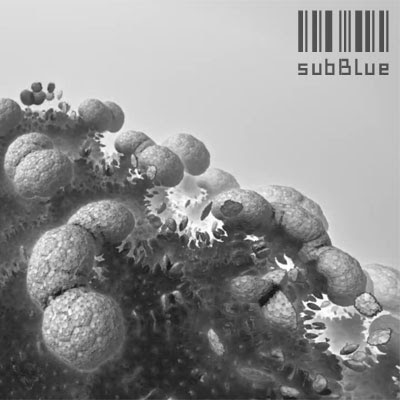
SubBlue

SubBlue describes himself as a "laser physicist turned web developer with an interest in generative graphics programming" and his works are fascinating.

Saturday, 19 February 2011

DANIEL PALACIOS


I find Daniel Palacios' work extremely beautiful, engaging, and thought-provoking. His work Waves has received a lot of attention in the blogosphere. Though not without reason, I prefer Intrusiones which illustrates sounds and its influence over time. That said, his entire catalogue is worthy of attention.

"The work of Daniel Palacios (Cordoba, 1981), an artist educated in sciences who graduated with a degree in Fine Arts, develops by applying the relations of art, science and technology to space and the perceptual systems as a result of his postgraduate studies which earned him Masters degrees in Art and Technology and Art in the Public Sphere.

Works such as ‘Waves’, ‘Outcomes’ and ‘Kill the Process’ have brought him to exhibitions like ‘Synthetic Times’ at the National Art Museum de China [NAMOC] and ‘El Discreto Encanto de la Tecnología (The Discreet Charm of Technology)’ at the Museo Extremeño e Iberoamerica of Contemporary Art [MEIAC] in Badajoz, the prestigious Neue Gallerie of Graz (Austria) and Zentrum für Kunst und Medientechnologie [ZKM] in Karlsruhe (Germany), one of the main sanctuaries for electronic art on a global level, in addition to taking part in such international fairs as ARCO and festivals of the stature of ARS Electronica of Linz (Austria). His work has received major recognition, including the second VIDA9.0 Art and Artificial Life awards and support for production of his work from the PROPUESTAS programme of the Arte y Derecho Foundation, in addition to being awarded an artist residency at Casa Lutetia (Sao Paulo, Brazil), published in the MIT Press specialist magazine ‘Leonardo’ in “Art from Andalusia for the 21st Century’ coordinated by Ivan de la Torre Amerighi, and the recent Tames & Hudson publication of ‘Art and Science Now: How Scientific Research and Technological Innovation are Becoming Key to 21st-Century Aesthetics’ by professor Stephen Wilson.
He has also given workshops and conferences on the combined use of technology and plastic arts in such schools and centres as the FAAP School of Plastics Arts (Brazil), School of Fine Arts of La Laguna (Tenerife), CRCC (Palma de Mallorca), Institute of Advanced Architecture of Catalonia, IAAC (Barcelona), File Symposium at the SESI Gallery (Brazil), Science Week at the Centre of Contemporary Art in Malaga…

Concerning information and electronic technology as tools for creating a process more than achieving a defined representation. Although it encompasses different themes, his work is a set of relationships with the surrounding environment: whether with the physical space itself as we perceive it or what phenomena are happening in it. In a certain sense, he creates situations which invite reflection or represent his own reflections at a specific moment of his research concerning perceptions and the manner in which they influence the way we relate to them.

Contact with reality and plastic languages is a major aspect of his work, which seeks to create situations and not simulations, utilizing ‘reality’ in his installations with the goal of creating plastic, non-digital results. Technology allows him to control what factors come into play in that space, in what measure and what their effect will be. In this way, the public is an indispensable part of the work by participating in its process, while the artist in turn can study their reactions, the one factor he cannot control and the vital aspect of his work."


Links:
Daniel Palacios
Daniel Palacios (Vimeo)
Daniel Palacios
Related Posts Plugin for WordPress, Blogger...